
Introduction
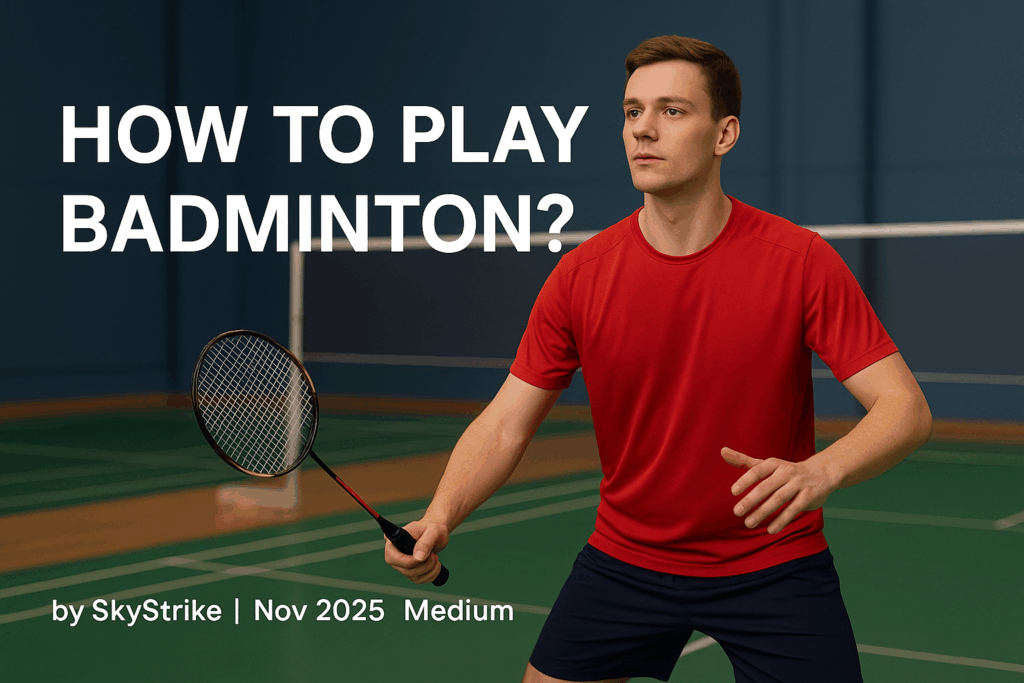
Badminton is one of the most exciting and fast-growing sports in the world. It’s easy to start, fun to learn, and perfect for fitness. Whether you’re a beginner or someone picking up a racket after years, learning how to play badminton correctly sets the foundation for better performance and long-term improvement.
Experience – Starting as a Beginner
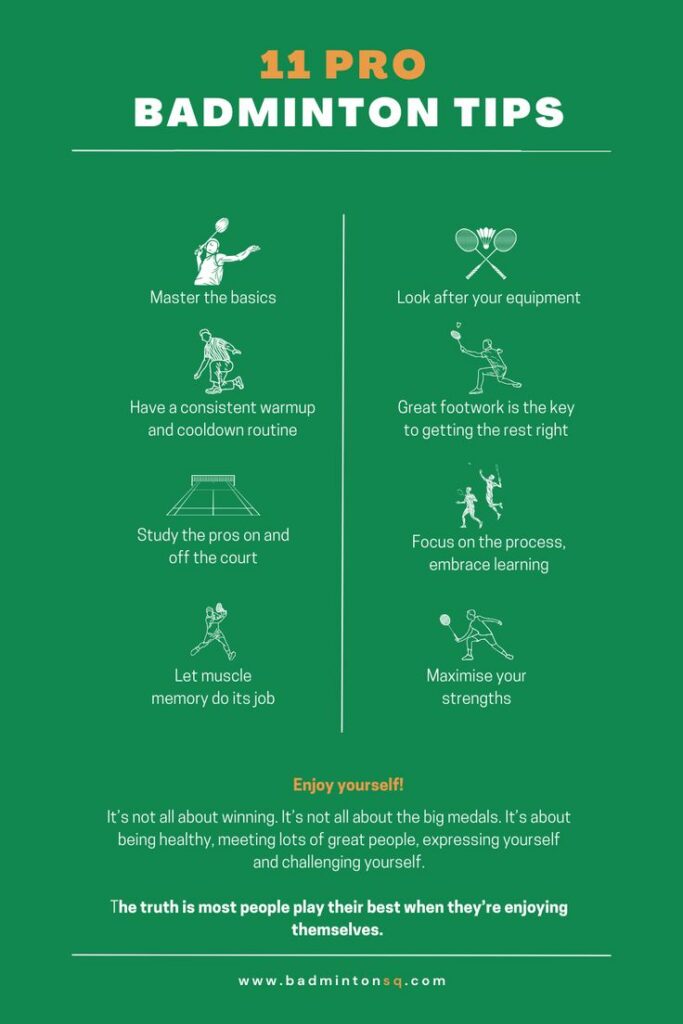
At SkyStrike, we’ve trained dozens of beginners who started with zero experience. The biggest takeaway? Badminton is simple to learn if you focus first on grip, footwork, and basic shots, not power. Once players learned the fundamentals, their movement, accuracy, and confidence improved quickly At SkyStrike, we’ve worked with hundreds of beginners who stepped onto the court for the first time unsure of how to hold a racket or make proper shots. Through real practice sessions, coaching, and observing tournaments, we’ve identified the most effective way for beginners to learn badminton quickly — by mastering the core fundamentals before attempting advanced techniques.
Most new players try smashing early and develop bad habits. Experience shows that focusing on grip, footwork, and consistency helps players improve faster than relying on power.
Expertise – Step-by-Step Guide to Playing Badminton
1. Learn the Basic Grip
Start with the forehand grip — like shaking hands with the racket. It ensures flexibility and better control over shots Learn the Correct Grip
Your grip is the foundation of every shot.
There are two main grips:
- Forehand Grip – Hold the racket like a handshake. This is used for clears, smashes, and drives.
- Backhand Grip – Turn the racket slightly so your thumb rests on the wider part of the handle. This gives strength in backhand shots.
A correct grip ensures flexibility, smooth wrist movement, and accuracy.
2. Master Basic Footwork
Good footwork helps you reach the shuttle quickly. Stay on your toes, move lightly, and practice side shuffles and diagonals Good footwork keeps you balanced and helps you reach the shuttle faster.
- Keep your body light and stay on your toes.
- Use a split step before moving to the shuttle.
- Move diagonally, not straight back.
- Return to the center “ready position” after every shot.
Badminton is about speed and recovery — footwork allows both.
3. Understand the Court & Rules
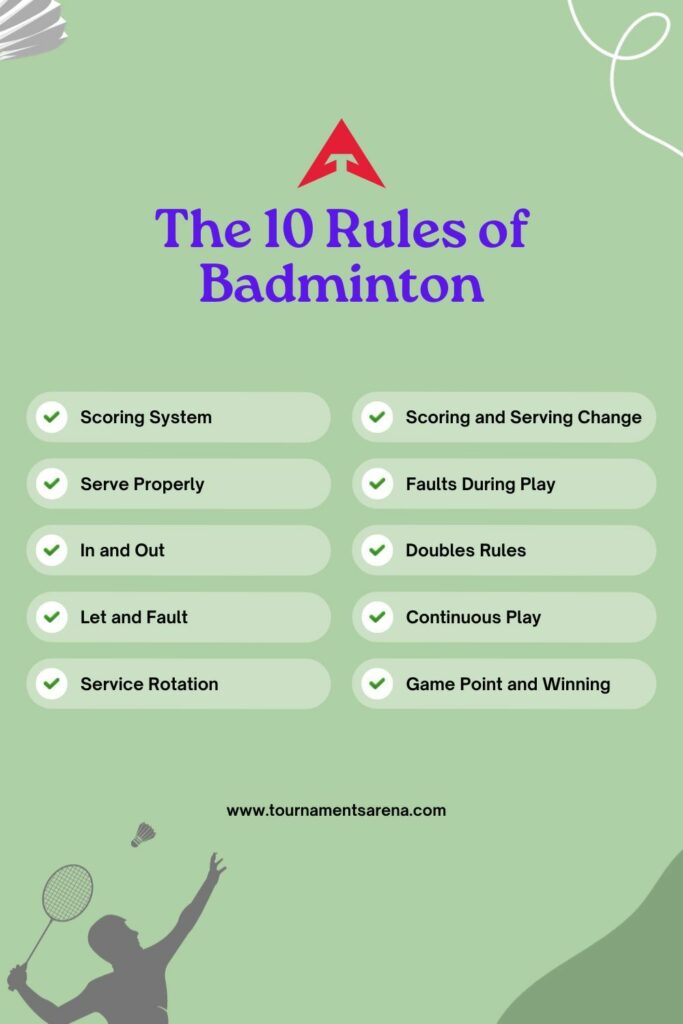
Badminton is played best of three games, each to 21 points. Serves must be hit below the waist and diagonally.
4. Learn Basic Shots
- Clear: High and deep shot to push the opponent back.
- Drop Shot: Soft shot near the net to force movement.
- Smash: Powerful downward hit to finish a rally.
- Net Shot: Gentle tap close to the net for control.
- To play confidently, beginners should learn these four essential shots:
- Clear – A high, deep shot to push the opponent to the backcourt.
- Drop Shot – A soft shot that falls close to the net.
- Smash – A fast downward attack shot.
- Net Shot – A gentle tap near the net to maintain control.
- Focus on control and direction rather than power.
5. Practice Consistency, Not Power
Beginners often try to smash too early — instead, build control and accuracy first One of the biggest mistakes beginners make is trying to hit too hard.
Consistency is more important than power because:
- It increases accuracy
- Builds muscle memory
- Reduces unforced errors
Once your technique improves, power will come naturally.
Authoritativeness – What Coaches Recommend
Professional coaches emphasize mastering grip, footwork, stance, and basic shots before learning aggressive techniques. According to national-level trainers, good fundamentals shorten your learning curve and help prevent injuries Professional coaches teach beginners to first master the fundamentals. Even world champions credit their success to early training in footwork, grip, and body positioning. According to top trainers, good technique beats strength — especially in long rallies.
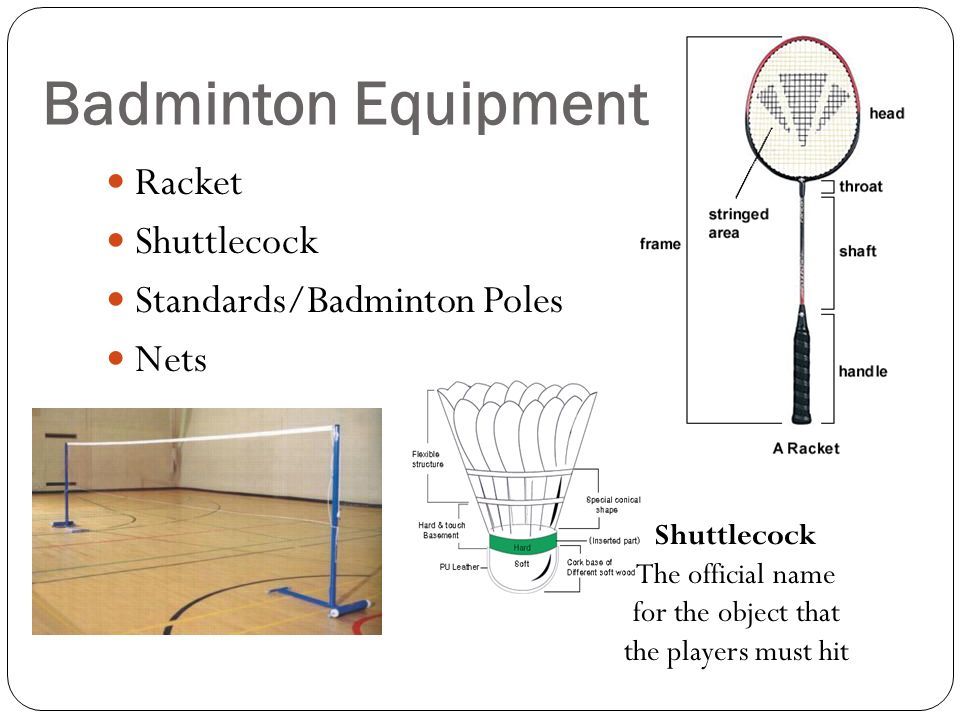
Brands like Yonex and Li-Ning design beginner-friendly rackets that help players learn proper form, emphasizing flexibility and control over power.
Trustworthiness – Real Tips That Work
Our recommendations are based on real coaching sessions, player improvement data, and expert techniques. No shortcuts — just practical knowledge that helps beginners grow fast.
Conclusion
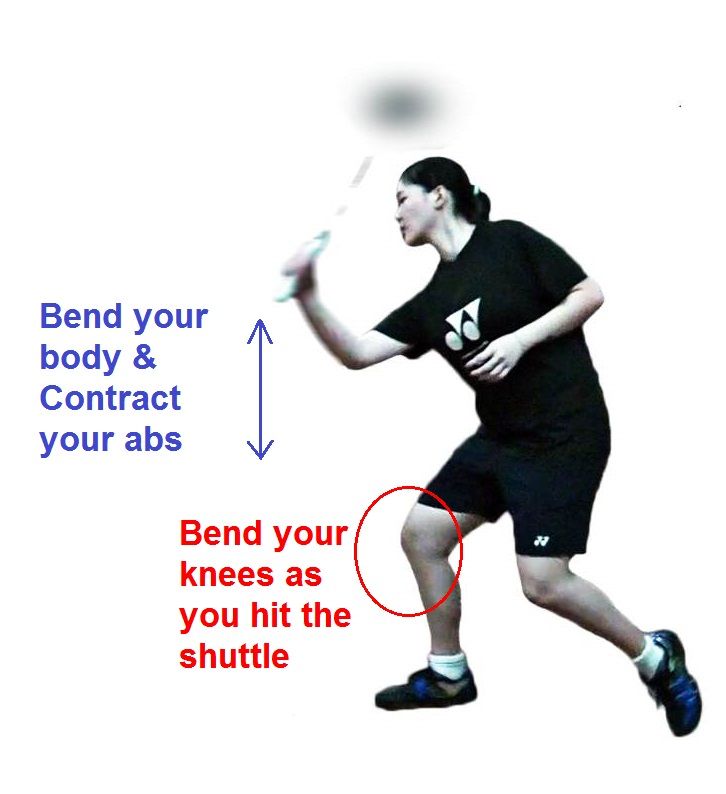
Learning how to play badminton is a blend of technique, movement, and practice. Once you understand the basics — grip, footwork, and simple shots — the game becomes fun, fast, and rewarding. Start slow, stay consistent, and you’ll enjoy steady improvement with every session.